Role: Product, UX, and UI Designer
MythLink - HeroBase
Timeline: August - December 2025
Category: Hybrid Product
Outcomes:
Increased TTRP immersion and optimized information searching.
Increased game-play time by 10+ minutes when compared with “amount of time distracted”.
Product Overview
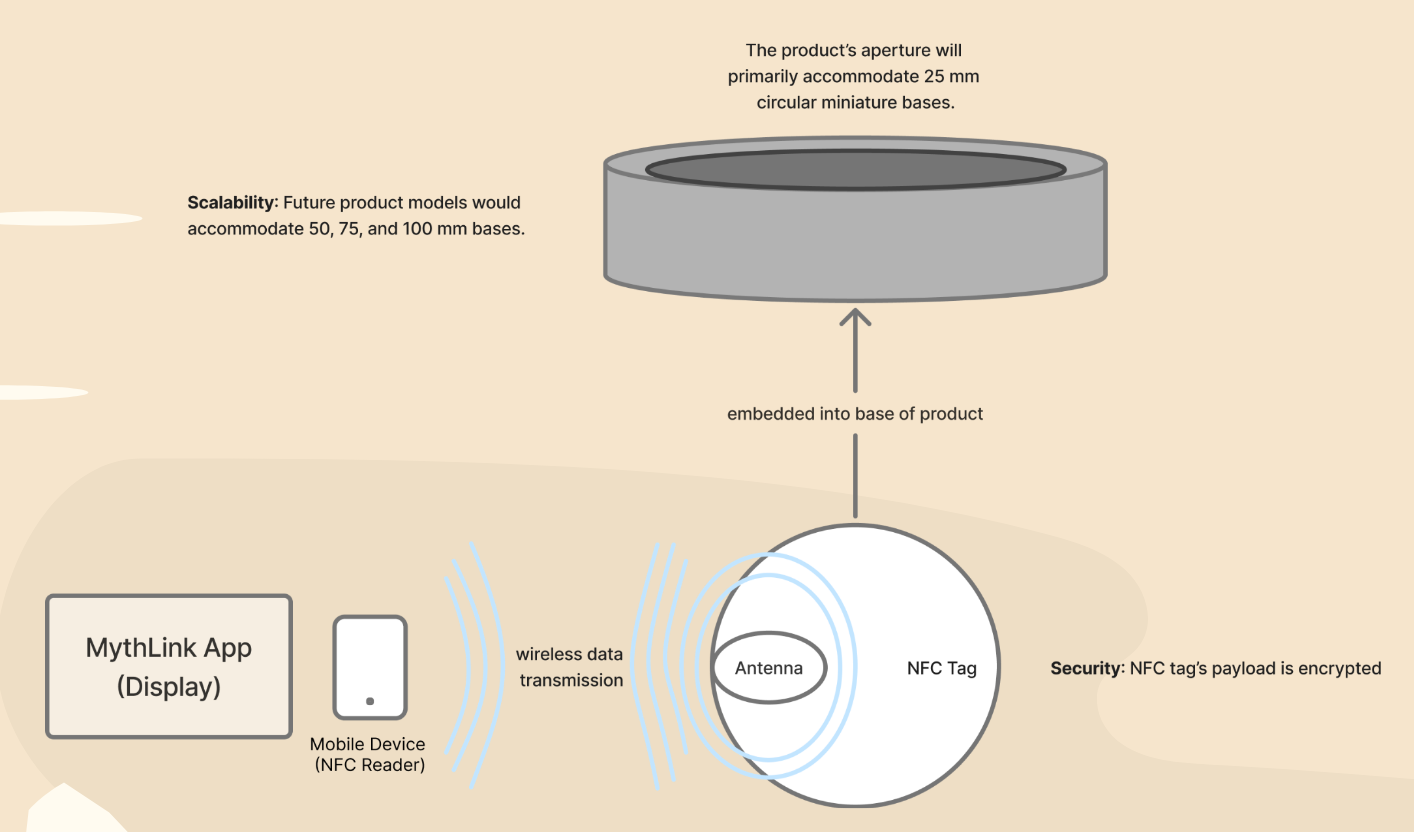
HeroBase™ is a hybrid tabletop gaming product that bridges physical miniatures and digital character management using NFC-enabled miniature bases and a companion mobile app (MythLink). The product is designed to streamline game-play for tabletop role‑playing games (TTRPGs) by reducing setup time, minimizing bookkeeping, and preserving immersion at the table.
Rather than replacing existing miniatures or forcing players onto screens, MythLink augments what players already love: physical minis, immersion, and face‑to‑face play.
Case Study
The Problem
Tabletop RPG sessions are frequently slowed down by fragmented tools and information overload:
Dungeon Masters juggle character sheets, stat blocks, initiative trackers, and improvised encounters
Players constantly switch between many tabs on their digital character sheets or have a folder with many paper sheets for their many different characters and campaigns.
New players feel overwhelmed by dense character sheets and information overload.
Digital tools increase distraction and break immersion
Semi-Structured Interviews
Participants:
Veteran Dungeon Masters
First-time and casual DMs
Experienced players
New players
Format:
In-person and Zoom interviews
Open-ended questions focused on workflow, not features
Key prompts:
“What usually slows your sessions down?”
“What tools are open during combat?”
“When do players lose focus?”
“What do you wish was faster or invisible?”
Research
Before designing MythLink™, we needed to understand why tabletop RPG sessions slow down, where immersion breaks, and how players and Dungeon Masters currently compensate for fragmented tools.
The goal was not to digitize tabletop play—but to identify where minimal technology could remove friction without disrupting the social experience.
Methods
2. Live & Recorded Session Observation
We observed:
Team-run tabletop sessions
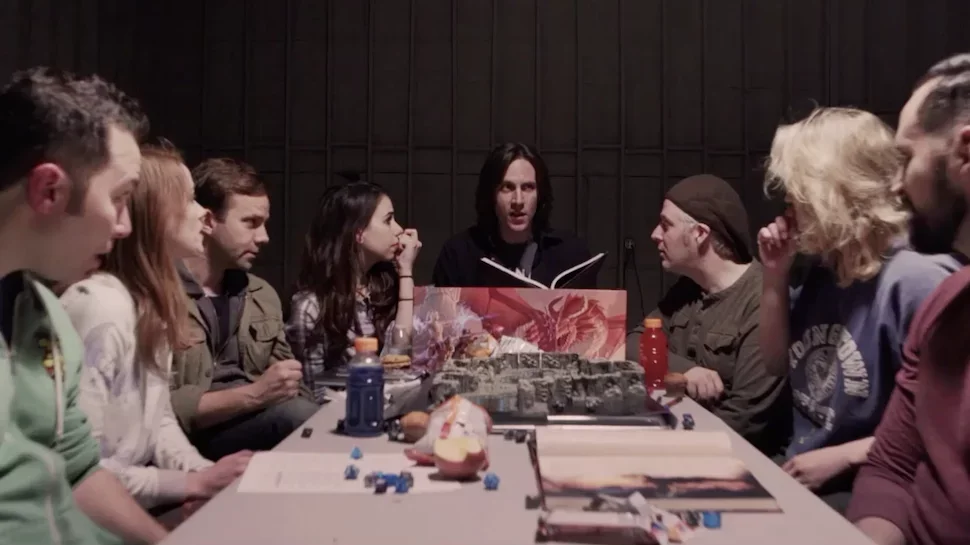
Twitch / YouTube campaigns (e.g., Critical Role)
Virtual tabletop vs physical tabletop differences
What we tracked:
Frequency of stat look-ups
Time spent setting up encounters
Interruptions during combat
Device usage during downtime
Observations
Most of the friction came from the dungeon masters end, which ended up affecting the players.
The categories with the most friction were the combat setup and stat tracking. This delay would often cause the players to disengage during downtime.
Courtesy of: Critical Role
3. Participatory Play-testing
One team member (James) DM’d a session for the rest of the team using existing tools (e.g., D&D Beyond).
This allowed us to experience:
Cognitive overload firsthand
Player hesitation during turns
The burden of managing hidden information as a DM.
Design Challenge
How might we reduce the burden and augment the management of TTRPG sessions without disrupting the physical and social experience of the game?
Constraints:
Must work with existing miniatures (no proprietary figures)
Must be fast, intuitive, and non-distracting
Must function offline in physical play spaces
Must be system‑agnostic (not locked to D&D only)
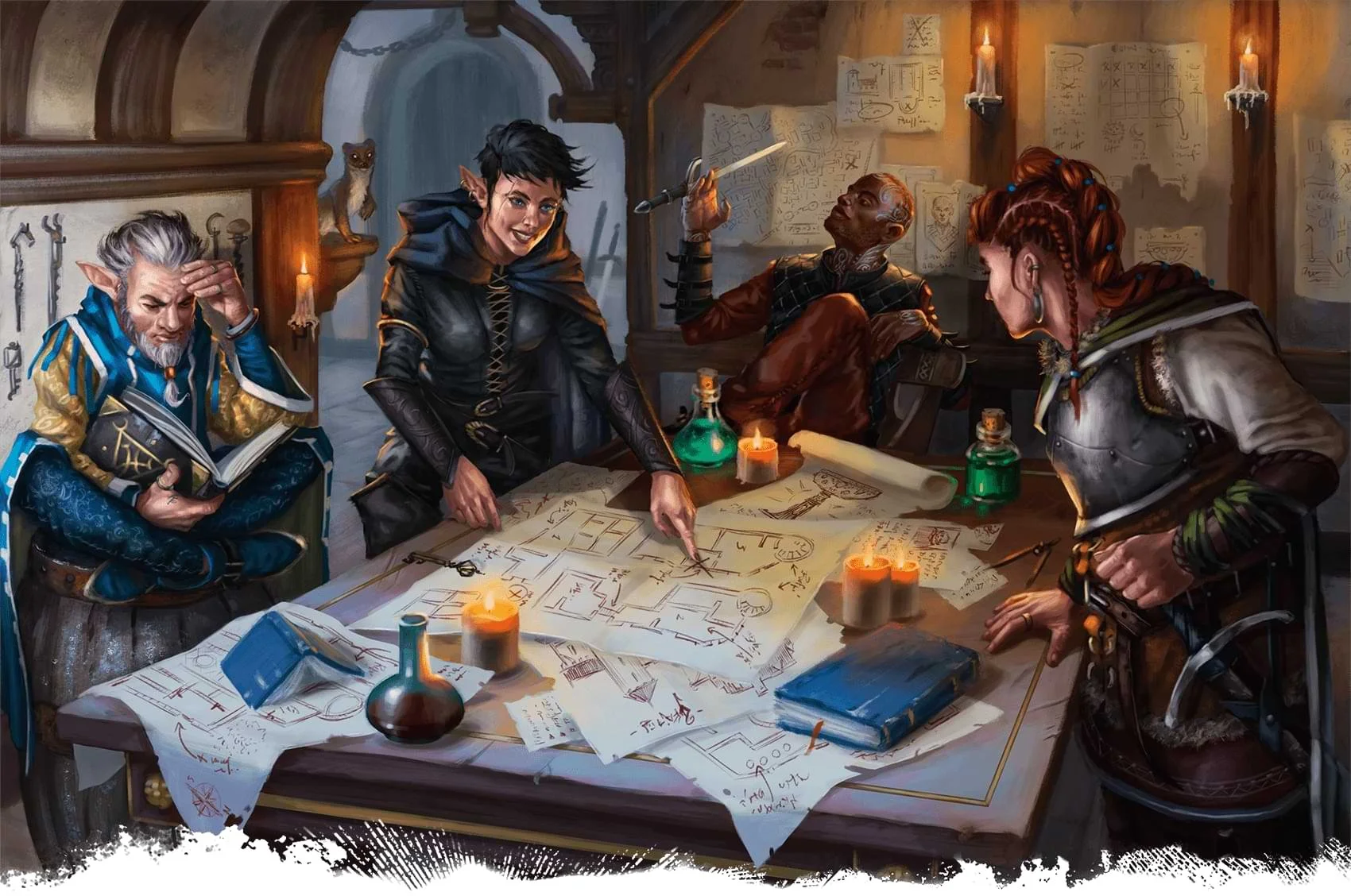
Courtesy of: Dungeons & Dragons
Concept Selection
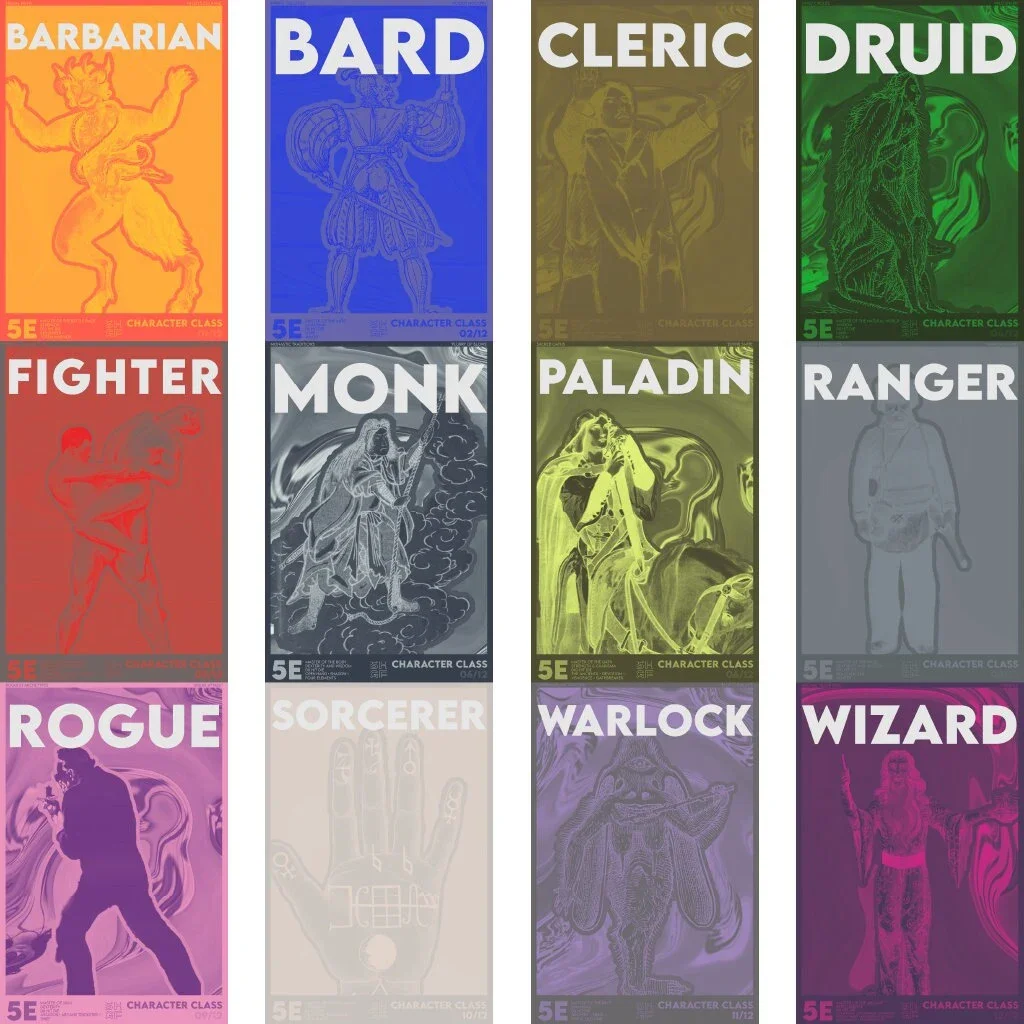
We explored many different options including:
Fully digital tabletops
Smart tablet game surfaces
AR-enhanced minis
NFC enabled miniatures
Most of these concepts failed due to cost, complexity, and or excessive tech usage. But through our feasibility analysis the NFC Bases emerged as the strongest solution, as they have:
Low cost of parts/manufacturing
Reliable tech
Minimal disruption to game-play
Compatible with existing minis
Scalable across systems
Concept Scoring and Trade-off
From a product design perspective, we had many options, but we kept these 3 things in mind:
Manufacturing: Plastic bases + NFC tags keep unit costs low
Durability: Physical wear tested against generic NFC stickers
Scalability: App and product architecture supports future expansions.
A key trade‑off was avoiding screens or LEDs on the base itself. This helped preserve immersion and reduced cost, while keeping the door open for future premium variants.
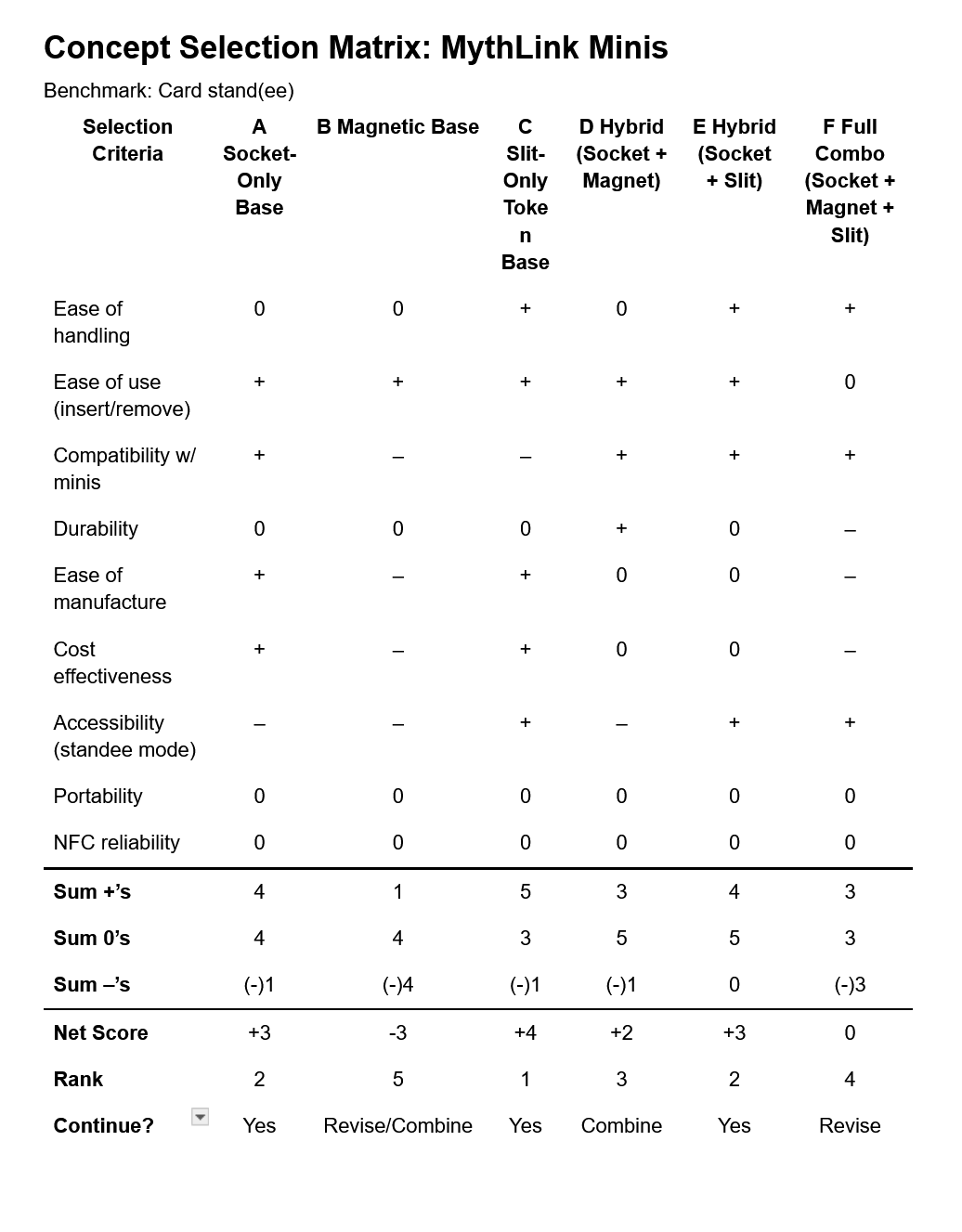
We ultimately chose concept E, combining the socket and the slit where the NFC tag goes.
The goal was to give players and DMs quick access to essential information while keeping attention on the physical table.
Key design principles:
Speed and depth: open the right information in seconds
System-agnostic structure: flexible data models for different TTRPG systems
Offline-first reliability: usable in basements, cafés, and everywhere in between
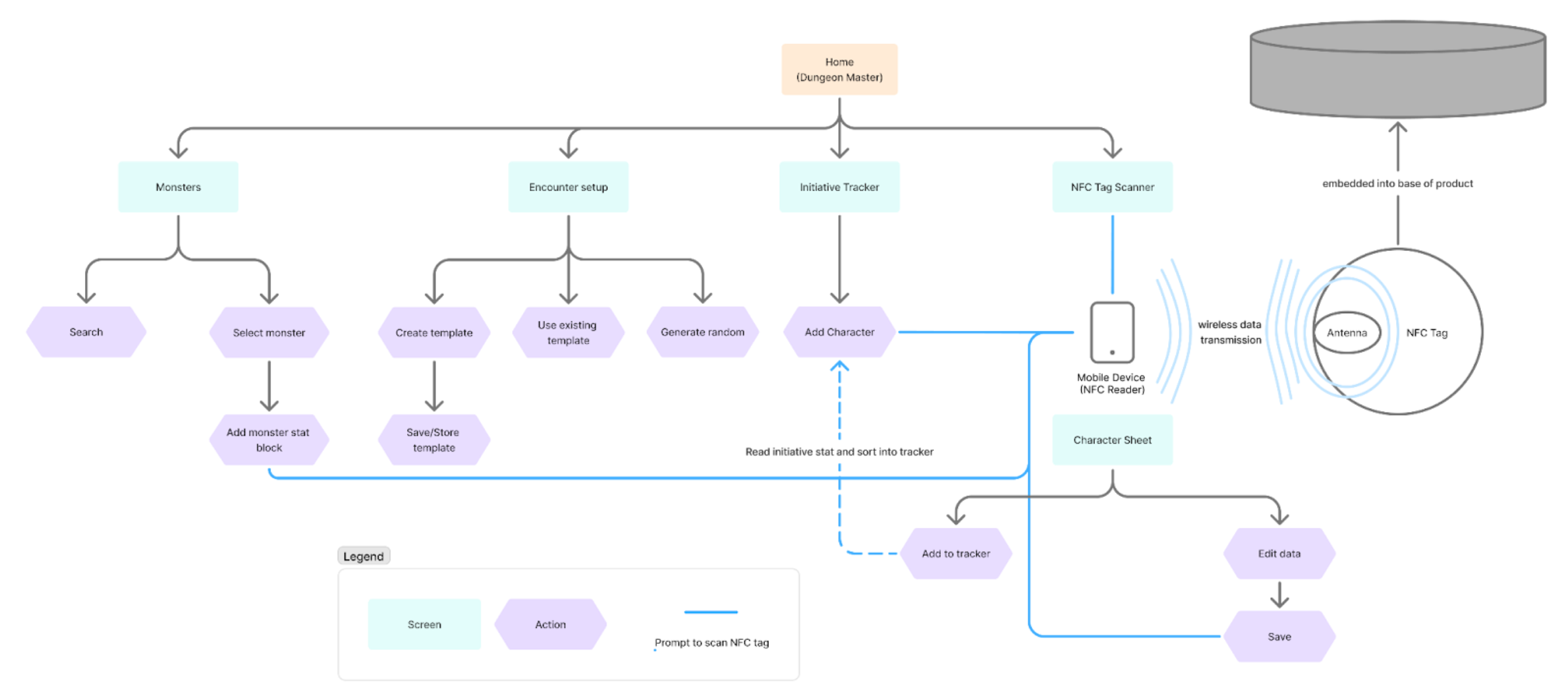
Core features include NFC scanning, simplified character and monster stat sheets, initiative tracking, and a lightweight encounter builder for DMs that are stored locally and can be used fully offline.
MythLink App
HeroBase (Physical)
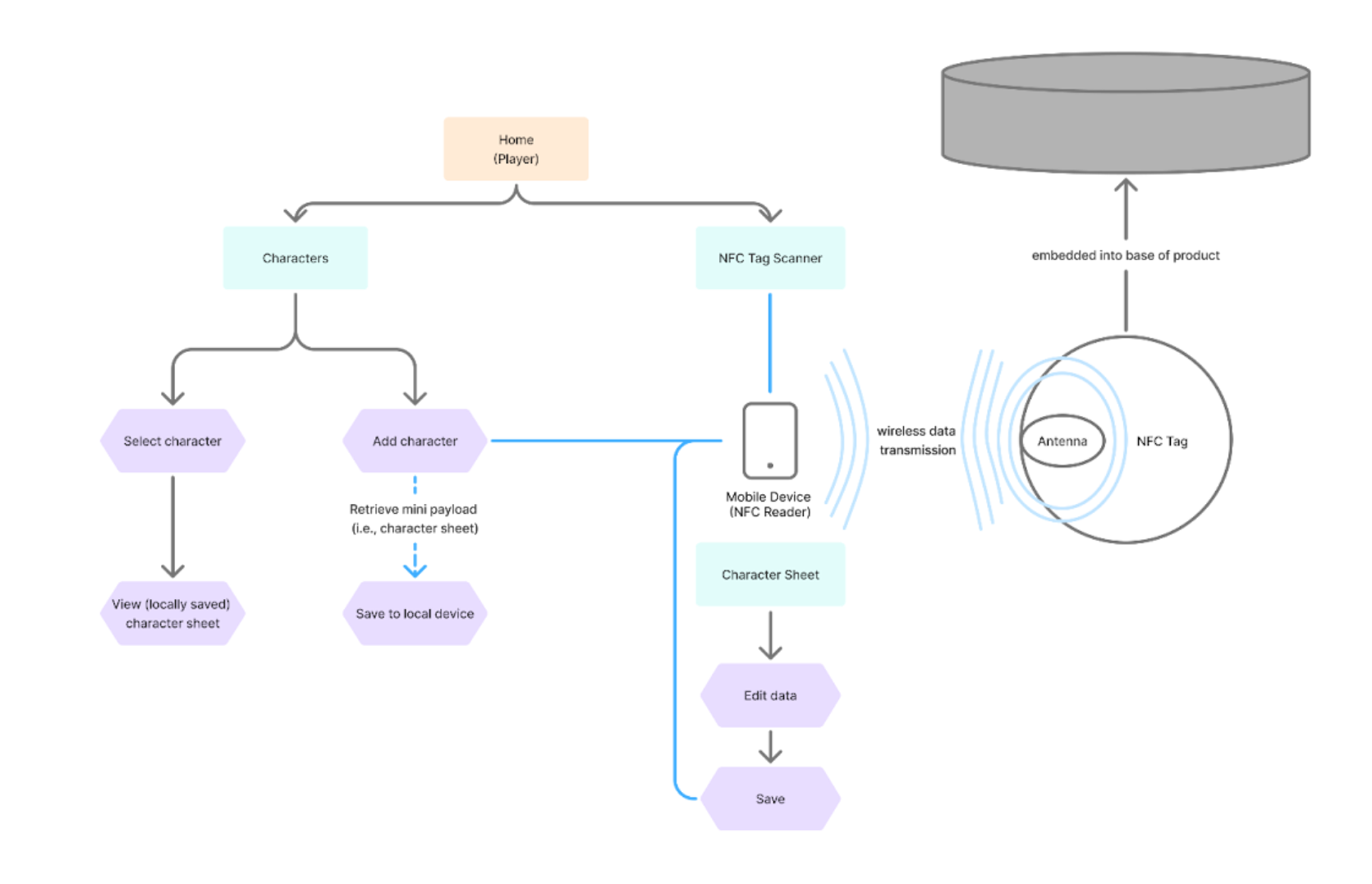
The user takes a mini and inserts it (bottom first) into the socket of HeroBase
Audible click confirmation that the mini is secure
The user flips the base to insert a card-stock NFC tag cutout through the bottom slit.
Dungeon Master View
How it Works
MythLink (Digital)
The user uploads or creates a new character sheet in the MythLink App
The user then assigns a HeroBase by using the in app scanner and tapping the unassigned NFC tag.
An animation will play to confirm data was sent
After an event (e.g., taking damage, earning gold), the user updates their sheet in-app and then taps the mini to overwrite data on the tag.
An animation will play to confirm overwritten data
Player View
Next Steps/Closing
If continued, our team would focus on developing a refined physical prototype, polishing the UI, and running extended testing using higher-quality materials across a full campaign.
MythLink - HeroBase is the result of continuous user validation and iteration. The final product prioritizes clarity, speed, and immersion over feature density while still highlighting all of the essentials.
This project shows how my team focused on not making tabletop games more digital. But, making them flow better, feel better, and stay human.